
Roulette Wheel Designs Connect Directly to Tiered Bonus Clearance Pathways
European wheels contain 37 pockets while American versions hold 38, creating measurable differences in house edge that operators factor into bonus structures across digital platforms, and these distinctions shape how players progress through tiered reward systems during the summer of 2026. Single-zero layouts deliver a 2.70 percent house edge whereas double-zero wheels reach 5.26 percent, data that platforms integrate when setting wagering multipliers for each bonus level.
Operators adjust clearance requirements according to wheel type because regulators in multiple jurisdictions require clear disclosure of game weighting, and this practice appears in licensing conditions from bodies such as the New Jersey Division of Gaming Enforcement. Players encounter different contribution rates when they place bets on European versus American configurations, which directly affects the speed at which bonus tiers unlock.
Number Sequence Patterns Influence Tier Progression Rates
Wheel layouts follow fixed sequences that determine bet outcomes, and these patterns intersect with bonus algorithms that track cumulative wagers across sessions. Researchers at academic institutions have examined how sequence repetition on single-zero wheels produces steadier distribution of results compared with double-zero arrangements, and platforms apply this information when calibrating the percentage of each bet that counts toward the next reward tier.
One study published through university gaming research programs showed that players using European configurations reach mid-level bonus milestones 12 percent faster on average than those restricted to American wheels under identical wagering rules. Platforms respond by offering adjusted multipliers that balance the mathematical edge difference, ensuring compliance with regional standards while maintaining consistent player progression timelines.
Regulatory Frameworks Guide Configuration-Based Adjustments
Authorities across regions enforce rules that link wheel specifications to bonus mechanics, and operators must document how each configuration contributes to clearance calculations. Figures from the Australian Communications and Media Authority reveal that licensed sites updated their tier structures in early 2026 to reflect new wheel weighting protocols, particularly for cross-border player accounts that access multiple variants within a single session.
These adjustments appear in the form of separate contribution tables for French, European, and American wheels, each tied to distinct bonus unlock thresholds. Industry reports indicate that platforms now publish configuration-specific multipliers alongside standard terms, allowing players to select wheel types that align with their preferred progression speed through reward levels.
Platform Variants Demonstrate Varied Integration Methods
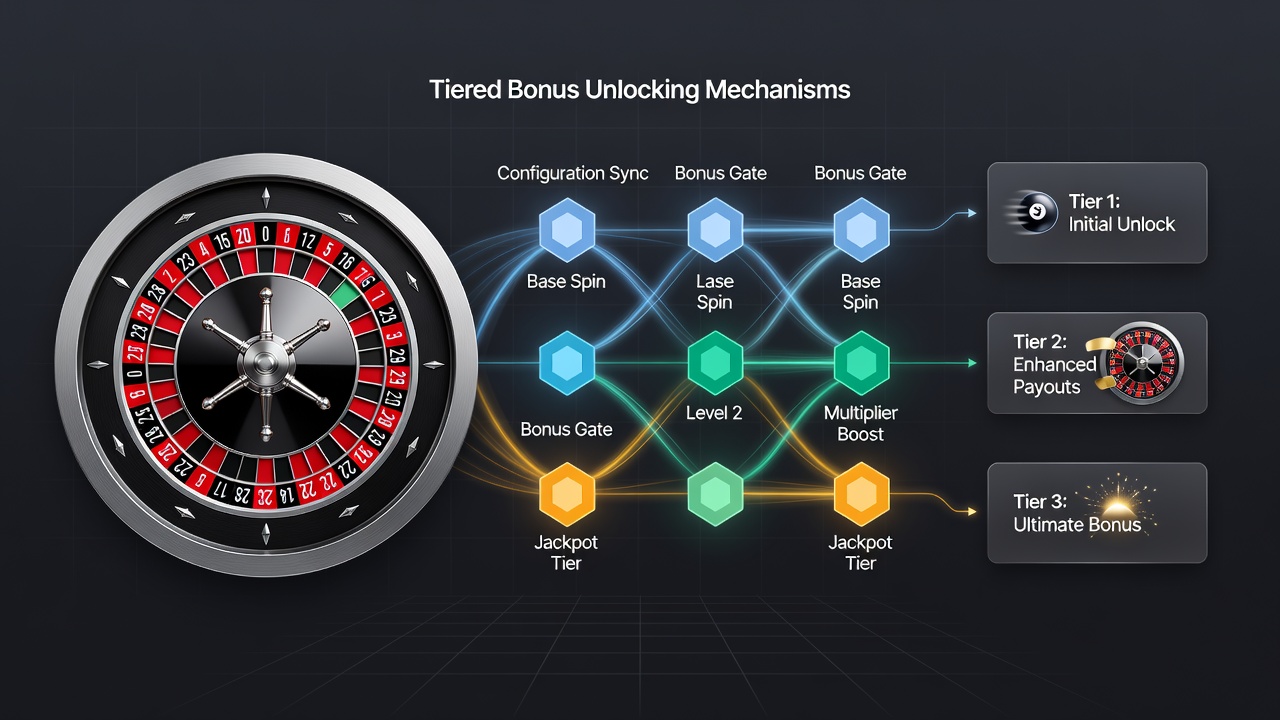
Digital operators deploy different approaches when connecting wheel configurations to bonus tiers, with some systems automatically detecting wheel type and applying corresponding contribution rates while others require manual selection at the start of each session. Data collected through platform analytics shows that automatic detection reduces player confusion and maintains consistent progression across European and American variants during extended play periods.
Multi-jurisdiction networks often maintain parallel bonus engines, one calibrated for single-zero wheels and another for double-zero arrangements, and these engines feed into unified tier structures that reward consistent activity regardless of chosen configuration. Observers note that this layered approach supports regulatory compliance across borders while preserving the mathematical integrity of each wheel type.
Clearance Pathways Reflect Wheel-Specific Data Inputs
Bonus unlocking mechanisms process real-time inputs from wheel outcomes, and the presence or absence of a double-zero pocket changes the rate at which cumulative wagers accumulate toward each tier. Platforms incorporate these inputs into algorithms that adjust remaining clearance requirements after every spin, producing visible updates on player dashboards that reflect the selected wheel configuration.
Recent implementations in August 2026 introduced dynamic multipliers that shift slightly based on average bet size and wheel type, a development tracked by industry monitoring services. Such systems ensure that players using lower-edge wheels do not receive disproportionate advantages in tier advancement compared with those on higher-edge configurations under the same promotional terms.
Conclusion
Wheel configurations and tiered bonus mechanisms operate as interconnected systems where number sequences, house edges, and regulatory requirements determine progression speed and clearance conditions. Platforms continue to refine these connections through configuration-specific weighting tables and compliance documentation, maintaining transparency across different roulette variants in regulated markets.