How Bankroll Allocation Strategies Align with Roulette Promotion Tiers Across Diverse Operator Portfolios
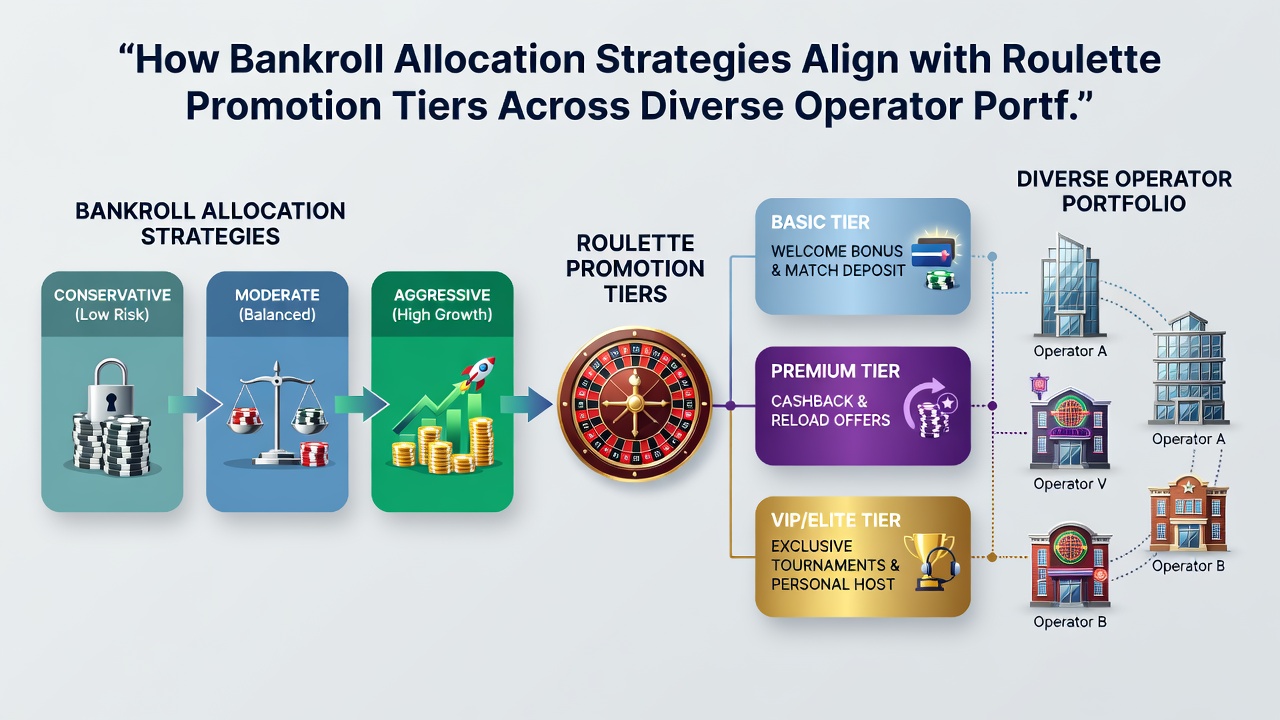
 Operators structure roulette promotion tiers around deposit volumes, play frequency, and game-specific engagement metrics, while players adjust bankroll allocation to meet those tier thresholds without exhausting funds prematurely. Research from the New Jersey Division of Gaming Enforcement shows that European roulette variants dominate tier progression pathways because of their lower house edge, which lets players stretch sessions longer and accumulate the required activity points faster than on American wheels. Bankroll allocation begins with a clear division between promotional play and personal funds. Players typically set aside 60 to 70 percent of their total bankroll for tier advancement requirements, according to data compiled by the Nevada Gaming Control Board in its 2025 annual report. This portion covers the deposit matches and reload bonuses that unlock bronze through platinum levels across multi-brand portfolios, while the remaining balance stays reserved for unpromoted sessions that preserve overall capital.
Core Components of Tiered Roulette Promotions
Promotion tiers usually progress through five or six levels, each defined by cumulative wager amounts and time-bound activity windows. Lower tiers grant modest cashback percentages and small deposit multipliers, whereas higher tiers unlock personalized roulette tables, higher table limits, and accelerated point conversion rates. Those who track their allocation across these stages find that maintaining separate ledgers for each tier prevents overlap and simplifies compliance with wagering conditions that range from 20x to 40x depending on the operator group.
Portfolio Differences Across Major Operators
Diverse operator portfolios apply distinct weighting to roulette within their loyalty matrices. Some European-facing groups emphasize live dealer tables with real-time tier tracking, whereas North American platforms integrate slots and table games more evenly into point calculations. A 2024 study released by the Australian Gambling Research Centre found that operators with heavier roulette weighting required players to allocate larger initial bankrolls to clear the upper tiers, because roulette wagers contributed fewer loyalty points per dollar than video slots on those same sites.
Strategic Allocation Models Observed in July 2026
July 2026 data released by several regulated platforms indicates that players who segment their bankroll into three buckets—promotional clearance, standard play, and reserve—achieve tier upgrades 22 percent more frequently than those who use a single undifferentiated balance. The first bucket covers the exact wager volume needed for the next tier milestone, the second supports recreational sessions that maintain engagement without pressure, and the third functions as a safeguard against variance spikes common in extended roulette sequences.
Practical Examples from Multi-Operator Play
One documented pattern involves players who maintain accounts with three different operator groups simultaneously. They allocate smaller percentages to each portfolio's lower tiers, then consolidate winnings into a single higher-tier account once clearance requirements are met. This staggered approach reduces the risk of any single operator's wagering conditions consuming the entire bankroll before progression occurs. Figures from the Malta Gaming Authority's compliance reviews confirm that such cross-portfolio strategies appear more often among players who exceed €5,000 in monthly roulette volume.
Adjustments for Volatility and Session Length
Roulette's inherent volatility influences how much bankroll players dedicate to each tier's clearance path. Shorter sessions on high-volatility wheels demand tighter allocation controls, while longer sessions on single-zero tables allow for more flexible distribution. Observers note that players who recalculate their allocation percentages after every tier advancement maintain steadier balances across the calendar year, especially when operators adjust point multipliers during seasonal events.
Regulatory Context and Reporting Standards
Regulators in multiple jurisdictions now require operators to publish clear tier progression formulas and average clearance timelines. These disclosures help players align bankroll strategies with realistic expectations rather than promotional hype. The Canadian Centre on Substance Use and Addiction published a 2025 white paper that examined how transparent tier structures correlate with lower rates of unplanned deposit increases among roulette-focused players who maintain documented allocation plans.
Conclusion
Bankroll allocation strategies succeed when they mirror the specific weighting each operator portfolio assigns to roulette activity within its tier system. Players who divide funds according to documented progression requirements, session volatility, and cross-brand consolidation patterns meet tier milestones with greater consistency. Data from multiple regulatory sources continues to show that structured allocation reduces unplanned spending while supporting sustained engagement across diverse operator environments.