Decoding Roulette Promotion Algorithms Through Player Session Heatmap Analysis in Virtual Gaming Networks

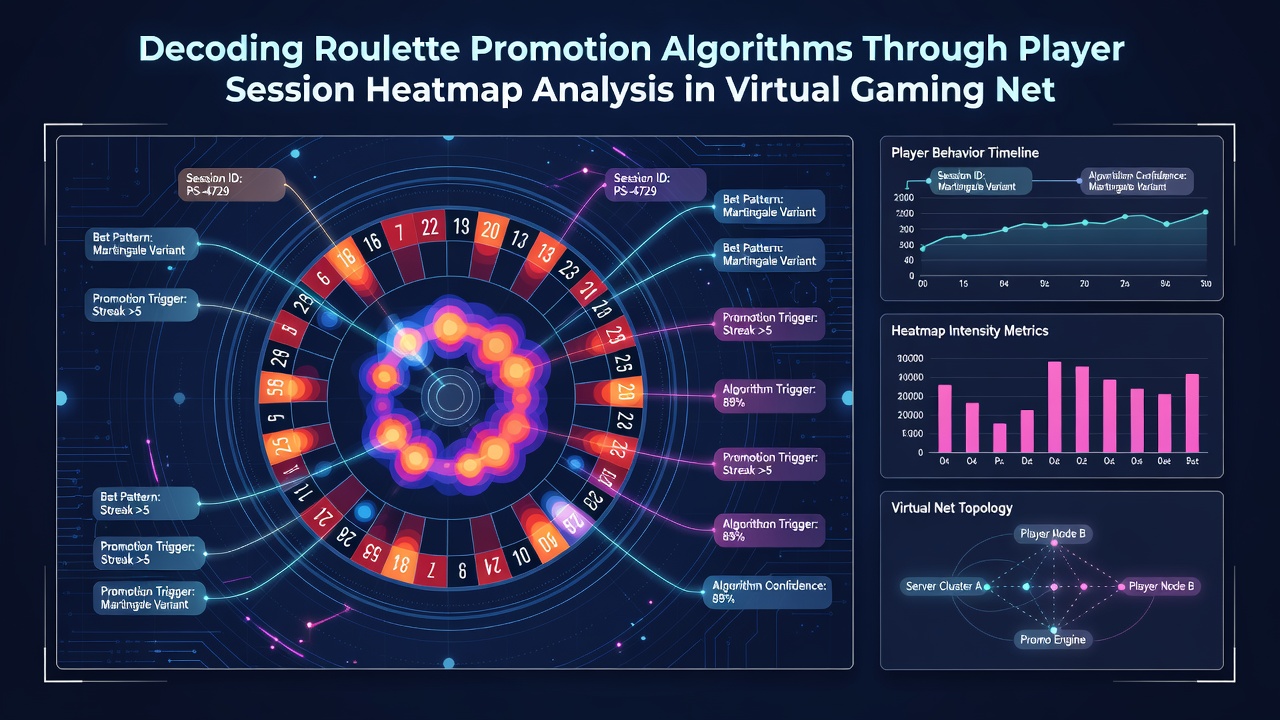
Virtual gaming networks generate extensive datasets from roulette sessions, and operators apply heatmap analysis to interpret these patterns for promotion targeting. Heatmaps aggregate metrics such as spin frequency, bet size variations, session duration, and time-of-day activity into visual grids that reveal player behavior clusters. Researchers at institutions including the University of Nevada have documented how these visualizations feed into algorithmic models that adjust bonus offers in real time.
Session Data Collection Methods in Networked Environments
Operators track player actions through server-side logs that record every wheel spin, wager amount, and outcome across distributed platforms. These logs convert into coordinate-based heatmaps where x-axes represent time intervals and y-axes denote bet categories, while color intensity signals engagement density. Data from European online gambling reports shows that networks processing over 50 million spins monthly rely on such grids to segment users into high-frequency, moderate, and low-activity groups before any promotion calculation occurs.
Integration with cross-border servers allows simultaneous comparison of sessions from different jurisdictions, which highlights regional differences in play velocity and average stake levels. Analysts combine this information with device identifiers and login timestamps to build multi-dimensional heatmaps that algorithms then query for promotion eligibility rules.
Algorithmic Structures Behind Roulette Promotions
Promotion algorithms parse heatmap outputs through decision trees and clustering routines that assign weights to variables like consecutive session length or sudden increases in bet magnitude. When a cluster shows sustained activity above a network-defined threshold, the system triggers tailored offers such as deposit matches or free spin allocations calibrated to the observed pattern. Studies published by the Canadian Centre for Gaming Research indicate these models update hourly during peak periods, using rolling windows of the previous seven days to refine cluster boundaries.
Heatmap-derived features also feed neural network layers that predict churn risk, allowing operators to deploy retention bonuses before session density drops. The process remains deterministic once parameters are set, with regulatory filings in New Jersey and several Australian states requiring disclosure of the core logic used to translate heatmap signals into offer values.
June 2026 Platform Updates and Heatmap Refinements
In June 2026 several major networks implemented enhanced granularity in their heatmap engines, increasing spatial resolution from 15-minute to 5-minute intervals. This change improved detection of micro-patterns such as brief high-stake bursts followed by rapid exits, which previously blended into broader clusters. Industry filings note that the update coincided with expanded use of real-time API calls between heatmap processors and bonus engines, reducing latency between pattern recognition and offer delivery to under three seconds.
Practical Applications Across Different Network Scales
Smaller platforms often apply simplified k-means clustering on two-dimensional heatmaps limited to time and stake data, while larger operators incorporate additional dimensions such as game variant preference and concurrent table participation. One documented workflow involves exporting heatmap centroids into SQL queries that rank players for tiered loyalty rewards, with European network operators reporting average reward distribution accuracy above 87 percent after calibration against historical redemption rates.
These techniques extend to tournament qualification, where heatmaps identify consistent performers across multiple sessions rather than relying solely on total volume. Network administrators adjust promotion frequency by monitoring aggregate heatmap entropy, a measure of behavioral diversity that signals when the player base requires new incentive structures to maintain engagement levels.
Regulatory Oversight and Data Governance
Authorities in multiple regions require operators to maintain audit trails linking heatmap inputs to specific promotion outputs. The Nevada Gaming Control Board and equivalent bodies in Victoria, Australia, mandate periodic reviews of algorithmic fairness, including verification that heatmap analysis does not inadvertently favor or exclude demographic segments. Compliance documentation typically includes sample heatmaps, pseudocode for clustering steps, and statistical tests confirming uniform application across user cohorts.
Cross-network data sharing agreements further standardize how session heatmaps are anonymized before aggregation, reducing privacy risks while preserving analytical value for promotion modeling. Observers note that these governance layers have prompted development of explainable AI modules that translate complex heatmap features into human-readable promotion rationales for regulatory submissions.
Conclusion
Player session heatmap analysis supplies virtual gaming networks with structured inputs that directly shape roulette promotion algorithms. Through systematic collection, clustering, and regulatory-compliant processing of session metrics, operators achieve targeted incentive delivery that aligns with observed behavioral patterns across distributed platforms. Continued refinements, including those implemented in June 2026, demonstrate ongoing evolution of these analytical pipelines while remaining subject to established oversight frameworks.