
Bankroll Requirements Shaping Live Dealer Roulette Access Across Digital Platforms
Digital platforms set specific bankroll thresholds that determine which players gain entry to live dealer roulette perks such as priority table access, dedicated dealers, and customized bonus structures, and these requirements vary by operator and jurisdiction while reflecting risk management practices documented in industry reports. Observers note that minimum deposit levels often start at $100 for basic live sessions yet climb to $500 or higher for VIP features, with data from multiple markets indicating that such tiers help platforms segment users effectively.
Core Mechanisms Behind Threshold Structures
Operators calculate these thresholds based on average player session values and historical loss patterns, so a player maintaining a $250 balance might unlock standard live tables whereas reaching $1,000 could activate enhanced perks including faster payouts and exclusive betting limits. Research from academic sources shows correlations between sustained bankrolls and retention rates, while platforms adjust criteria quarterly to align with regulatory expectations in regions like New Jersey and Malta.
Thresholds function through automated systems that track real-time balances, and when accounts dip below set amounts players lose access until replenishment occurs, a process that data from platform analytics confirms reduces exposure for high-stakes features. Those who study these systems find that thresholds frequently incorporate wagering history, granting gradual upgrades as cumulative deposits increase over months.
Regional Differences in Threshold Application
European platforms tend to apply lower entry points around €150 for live dealer perks because local regulations emphasize consumer protection alongside revenue goals, whereas North American sites often require $300 minimums tied to state-specific licensing rules. In August 2026 several operators in emerging markets revised these figures upward following compliance reviews, according to records from the Malta Gaming Authority.
Australian jurisdictions link thresholds to responsible gaming frameworks, requiring documented proof of financial capacity before granting access to premium roulette streams, and similar patterns appear in Canadian provinces where provincial oversight shapes eligibility. Figures from regulatory filings reveal that higher thresholds correlate with fewer disputes over bonus clearances in live environments.
Player Progression and Perk Unlocking Pathways
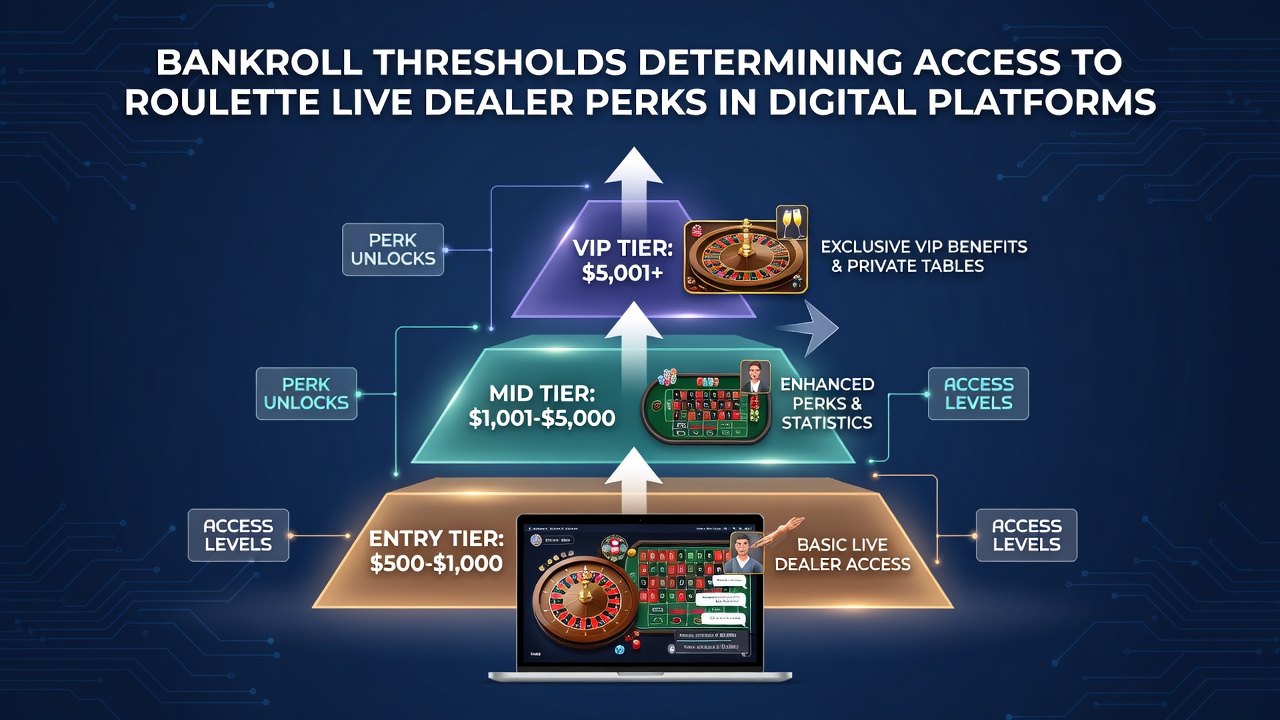
Many platforms structure perks in ascending tiers where a $500 bankroll opens mid-level live tables with reduced house edges during promotional windows, yet $2,000 balances unlock private dealer sessions and loyalty multipliers, according to operational data shared across multiple sites. Players advance through these layers as balances stabilize, and systems automatically notify users when new features become available.
Case examples from various networks illustrate how consistent deposits over 30-day periods accelerate threshold clearance, enabling access to perks like real-time strategy consultations from dealers, while sporadic activity keeps accounts at lower tiers. Evidence from user behavior studies indicates that such pathways encourage longer engagement without mandating immediate high deposits.
Technical Integration and Compliance Factors
Backend algorithms monitor bankroll metrics alongside geolocation data to enforce thresholds, ensuring compliance with local laws that prohibit certain perks below established financial markers, and this integration prevents unauthorized access across borders. Industry organizations report that automated alerts help players understand remaining requirements before upgrades activate.
Security protocols tie threshold verification to identity checks, so new accounts undergo initial screening before any live dealer features appear, a step that regulatory bodies in multiple regions mandate to curb money laundering risks. Platforms update these protocols regularly, with changes in August 2026 reflecting enhanced verification standards in cross-border networks.
Conclusion
Bankroll thresholds continue to serve as primary gatekeepers for live dealer roulette perks on digital platforms, shaping access through measurable financial criteria that align with regulatory and operational needs. Data across jurisdictions demonstrates consistent application patterns, while ongoing adjustments reflect evolving market conditions and compliance requirements. Those monitoring these systems observe steady refinement in how thresholds balance player opportunity with platform sustainability.